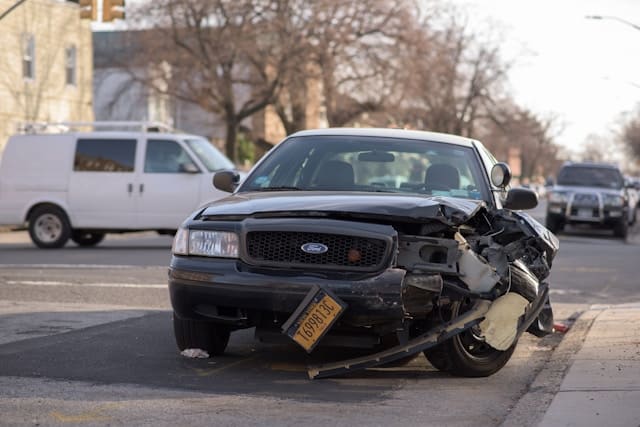
Rear-ended in Queens? Stop and check for injuries. The NYPD says to call 911 if anyone is hurt or a vehicle can’t be moved.
If no one is hurt and both cars can move safely, pull out of traffic before exchanging information. At Shalom Law, we represent people injured in Queens car accidents. One thing to keep in mind before you leave the scene: swapping insurance cards doesn’t file a DMV report or give your insurer written notice of an injury.
At a Queens red light, should you move the car first?
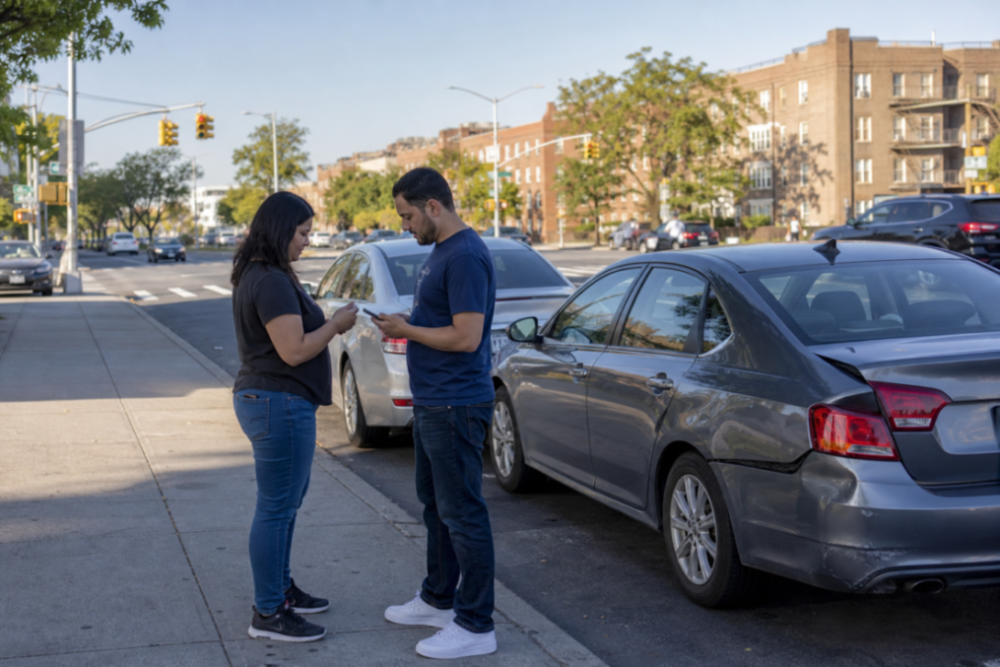
Move out of traffic if no one is hurt and both cars can move safely. Say you’re stopped on Queens Boulevard when the driver behind you hits your bumper: a photo of where the cars came to rest might help later, but don’t step into traffic to take it.
Here’s what the NYPD’s collision guidance says to do:
- Someone is hurt or a vehicle can’t be moved: Call 911. Give the nearest cross street and your direction of travel.
- No one is hurt and both cars can move safely: Pull over somewhere safe to exchange information. If the crash only damaged property and both drivers exchange the required details, you generally don’t need an officer to take a report.
- The other driver won’t or can’t exchange information: Call 911 from a safe spot and explain what happened. Note the plate if you can see it safely.
Once you’re safely parked, use the NYPD’s collision information exchange sheet to check that you’ve got the license, registration, and insurance details. If the driver borrowed the car, write down the registered owner’s name and address too. Before you part ways, make sure the plate, insurer, and policy number are legible in your photos.
Four documents that do different jobs
When someone asks, “Did you report it?” the next question is, “To whom?” Exchanging details with the other driver isn’t the same as filing with the DMV or notifying an insurer about an injury.
| Document | Who completes it and where it goes | What it’s for |
|---|---|---|
| NYPD collision information exchange sheet | Drivers can use it to share details with each other. | It records driver, vehicle, owner, and insurance information. It isn’t a police crash report. |
| Police crash report | An officer prepares it when police investigate and document a crash. | It records the officer’s account of the collision. See the NYPD’s instructions for getting a copy. |
| Motorist crash report (MV-104) | Each involved driver files with the New York DMV when reporting is required. | It meets the driver’s state reporting obligation. A police report doesn’t replace it. |
| Written no-fault notice | An injured driver or passenger generally sends it to the insurer of the vehicle they were in. | It gives the insurer written notice of an injury claim. A phone call about bumper repairs isn’t written injury notice. |
Once you have the police report, knowing how to read a New York accident report can help you make sense of the entries and codes.
Don’t wait for a bumper estimate to check the 10-day DMV filing rule
Under New York Vehicle and Traffic Law § 605, a driver generally must file an MV-104 within 10 days of the crash if anyone was injured or killed, or if damage to any one person’s property exceeded $1,000. That includes your own property. Don’t add two owners’ losses together: if each has $700 in damage and nobody was hurt, those amounts don’t trigger the property-damage rule.
Say your bumper looks fine, but the shop can’t inspect it until next week. The NYPD’s non-injury collision FAQ says you may file voluntarily if you’re not sure the damage exceeded the threshold. Check the DMV’s filing instructions rather than waiting for the estimate, and keep a copy of what you send.
What if you start hurting after you get home?
Get medical attention promptly rather than waiting to hear back from an adjuster. Tell the clinician when the crash happened, what you felt at the scene, and what’s changed since. If you end up making an injury claim, your treatment and medical records can help show when symptoms began and what care you needed.
Written no-fault notice generally goes to the insurer of the car you were in
If you were in a car, you generally send written notice to the insurer covering that car, even if the other driver caused the crash. The New York Department of Financial Services’ no-fault guidance says to give written notice as soon as reasonably practicable and generally no later than 30 days after the crash.
If you’ve missed that deadline, send the notice promptly. The insurer can require written proof of a clear and reasonable justification for the delay.
As the department’s auto insurance guidance explains, New York no-fault coverage can pay eligible medical expenses and part of your lost wages, but it won’t pay for bumper repairs. If you’ve already opened a repair claim, ask where to send the written injury notice and keep proof that you sent it.
How Shalom Law can help you decide what comes next
We represent people hurt in car accidents in Queens, including rear-end crashes in Forest Hills. If the other driver’s adjuster asks you to give a recorded statement, talk with a lawyer first. The adjuster’s message, your exchange sheet, or a report number can help us understand what’s happened so far, but you don’t need a complete file before you call.
We can explain what insurance may cover, whether you might have a claim against the other driver, and whether hiring a lawyer makes sense. If your injury is minor and no-fault fully covers your losses, we’ll tell you if you may not need a lawyer.
If we take your injury case, we charge an attorney’s fee only if we recover money for you. We’ll explain how that works on the first call.
Attorney Advertising
If you were hurt in a rear-end crash, you can talk with a Queens rear-end accident lawyer at Shalom Law about what happened and whether we can help. Call 718-800-0000 right after an accident for a free consultation. Time is of the essence.
Frequently Asked Questions
Do I still file an MV-104 if NYPD wrote a report?
Yes. The New York DMV requires you to file your own MV-104 within 10 days if anyone was injured or killed or damage to any one person’s property exceeded $1,000. The officer’s report doesn’t replace yours.
Where do I get a copy of the police crash report?
The NYPD says you can request a copy in person at the precinct where the crash happened during the first 30 days after the report was filed. After that, request it from the New York DMV.
Can I file before I know what my bumper repair will cost?
Yes. The NYPD says you may file voluntarily if you can’t tell whether damage to any one person’s property exceeded $1,000. If filing is required, the 10-day deadline runs from the crash, not the shop appointment.
Whom do I notify if I was a passenger in a friend’s car?
For no-fault benefits, the New York Department of Financial Services says you generally notify the insurer covering the car you were in. Ask your friend for the policy details and send written notice of your injury promptly. Don’t assume your friend’s report covers you.
Should I call a lawyer before talking to the other driver’s insurer?
If you’re hurt and the other driver’s insurer asks for a recorded statement, talk with a lawyer first. That’s separate from sending timely written no-fault notice to the insurer covering the car you were in.