
Hit-and-Run Accident Lawyer in Forest Hills, NY
Were You Injured by a Hit-and-Run Driver in Forest Hills?
Millions recovered for people injured in hit-and-run crashes in Forest Hills and throughout Queens, Brooklyn, the Bronx, Manhattan, Staten Island, Nassau and Suffolk Counties, and Upstate New York.


Jonathan Shalom
Founder

$1,800,000
Tractor Trailer Accident

$900,000
Rear-end Collision
$1,000,000
Truck Accident
$340,000
Truck Accident

$295,000
Construction Accident

$140,000
Motorcycle Accident

$125,000
Slip and Fall Accident

$130,000
Hit and Run Injury
$225,000
Scaffolding Accident
$170,000
Semi-Truck Accident
$500,000
Construction Accident

$245,000
Bus Accident

$150,000
Uber Accident
$200,000
Tractor Trailer Accident
$350,000
Construction Site Accident
$210,000
18-Wheeler Accident

$450,000
Pedestrian Accident
$325,000
Construction Accident
$200,000
Truck Accident
$583,000
Commercial Truck Accident
Shalom Law
Over $50 Million Dollars Recovered for Our Clients!
A hit-and-run crash can leave you injured, angry, and unsure where to turn—especially when the driver disappears before exchanging information. If a vehicle struck you on Queens Boulevard, 71st/Continental Avenue, Austin Street, Metropolitan Avenue, Yellowstone Boulevard, Union Turnpike, or another Forest Hills road, Shalom Law can help you protect evidence and pursue every available source of compensation.
If you or a loved one was hurt by a fleeing driver, contact Shalom Law for a free consultation with a Forest Hills hit-and-run accident lawyer.
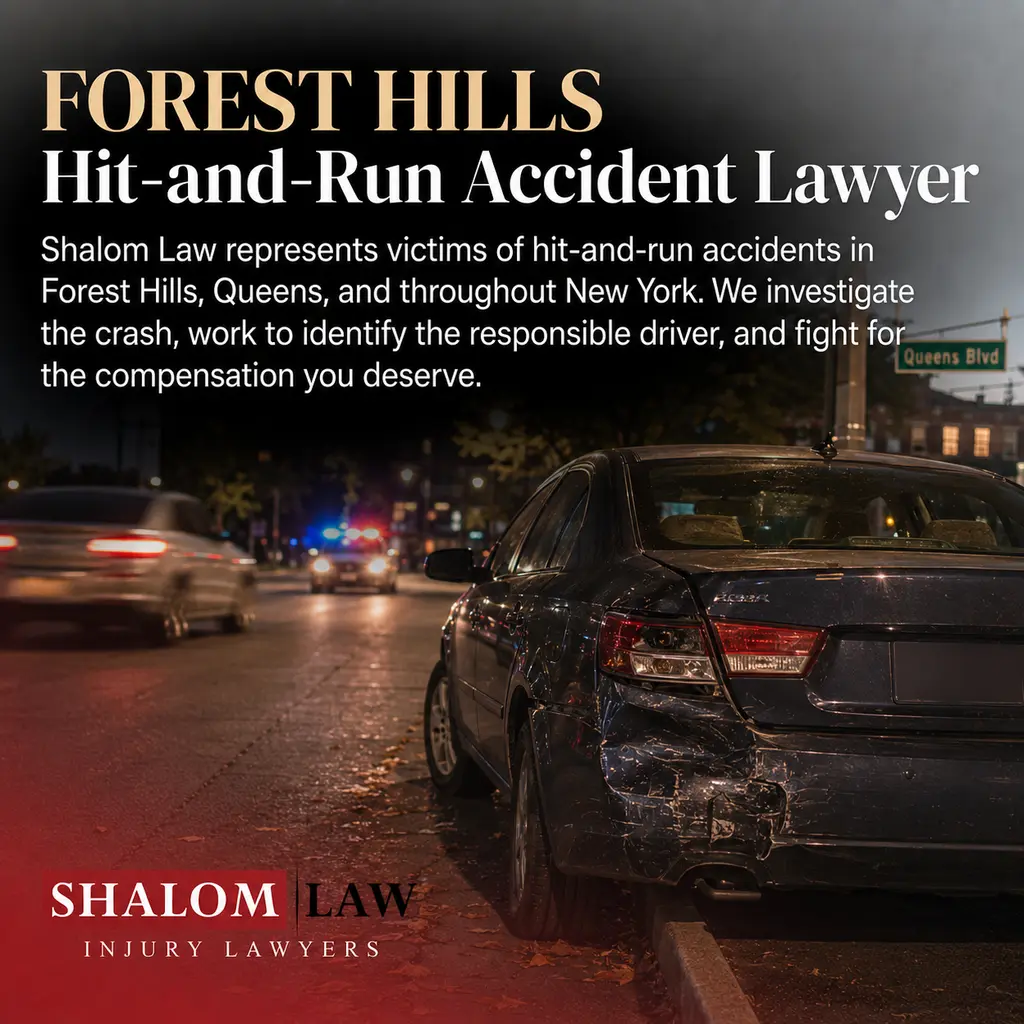
Injured in a Hit-and-Run Crash in Forest Hills?
What Makes a Forest Hills Hit-and-Run Claim Different?
A driver who leaves the scene creates problems that do not arise in an ordinary collision. You may not have a name, insurance carrier, license plate, or even an accurate description of the vehicle. At the same time, short reporting and insurance deadlines may begin immediately. A fast investigation can make the difference between locating the vehicle, preserving a surveillance recording, or losing evidence that was automatically overwritten.
Shalom Law represents motorists, passengers, pedestrians, cyclists, and families harmed in hit-and-run crashes throughout Forest Hills and Queens. Our office is conveniently located on Metropolitan Avenue. We coordinate with law enforcement, canvass for cameras and witnesses, analyze vehicle debris, review applicable insurance policies, and document the medical and financial effects of the collision.
A claim may proceed against an identified driver, through uninsured-motorist coverage, through New York no-fault benefits, or—when strict eligibility requirements are met—through the Motor Vehicle Accident Indemnification Corporation (MVAIC). The correct path depends on the facts, the policies available to you and members of your household, and whether the fleeing vehicle is eventually identified.
How Can Shalom Law Help Identify a Hit-and-Run Driver?
Evidence can disappear quickly on busy commercial and residential streets. Our team can seek police records, 911 and dispatch information when available, photographs, dash-camera footage, MTA or municipal video where legally obtainable, nearby building and business surveillance, witness statements, repair estimates, and fragments left at the scene. Paint transfer, broken light assemblies, bumper pieces, and damage height may help narrow a vehicle’s make, model, color, or direction of travel.
Forest Hills has many potential camera sources: apartment entrances, parking garages, storefronts along Austin Street and Metropolitan Avenue, traffic-facing buildings on Queens Boulevard, and homes near quieter intersections. A useful request should identify the precise place and time because many systems overwrite footage within days. We also examine whether a rideshare, delivery, taxi, commercial vehicle, or vehicle owner may be responsible under New York law.
Locating the driver is important, but it is not the only way to pursue a claim. We simultaneously evaluate your own policy, household policies, no-fault eligibility, and MVAIC rules so one investigation does not delay another time-sensitive notice.
Who Can Bring a Forest Hills Hit-and-Run Injury Claim?
Hit-and-run collisions can injure more than the driver of a struck car. Shalom Law evaluates claims involving:
- Drivers and passengers in vehicles struck by a fleeing motorist
- Pedestrians hit in crosswalks, parking areas, or along neighborhood streets
- Cyclists and e-bike riders forced off the road or struck directly
- Motorcyclists injured by unsafe turns, lane changes, or dooring incidents
- People hurt in multi-vehicle crashes started by a driver who escaped
- Families pursuing claims after a fatal hit-and-run collision
- Victims of unidentified, uninsured, stolen, rideshare, delivery, or commercial vehicles
The available defendants and insurance sources are fact-specific. A victim should not assume there is no claim merely because the fleeing driver has not yet been found.
What Injuries Commonly Result From Hit-and-Run Crashes?
A fleeing driver may strike without braking, push another vehicle into traffic, or leave an injured pedestrian or cyclist without assistance. Common injuries include fractures, traumatic brain injuries, concussions, spinal cord damage, herniated discs, whiplash, torn ligaments, shoulder and knee injuries, internal injuries, lacerations, nerve damage, and psychological trauma. Some symptoms—such as dizziness, headache, numbness, or increasing back pain—may appear hours later.
Call 911 when emergency help is needed and obtain prompt medical evaluation even if you initially believe you can walk away. Follow-up care, diagnostic imaging, specialist visits, therapy, and treatment compliance help protect your health and establish a contemporaneous record of the crash’s effects. Tell each provider exactly how the collision occurred and report every symptom. This page provides general legal information, not medical advice.
Forest Hills Hit-and-Run Accident Attorney
Where Do Hit-and-Run Crashes Happen in Forest Hills?
Forest Hills combines major through-routes, residential blocks, shopping corridors, subway and LIRR activity, bus stops, deliveries, and frequent pedestrian movement. A fleeing driver may disappear into traffic on Queens Boulevard near 71st/Continental Avenue, Yellowstone Boulevard, 75th Avenue, or Union Turnpike; turn from Austin Street toward Ascan Avenue or Station Square; continue along Metropolitan Avenue toward Woodhaven Boulevard; or reach an entrance to the Grand Central Parkway or Jackie Robinson Parkway.
Those local details guide an investigation. The direction of travel affects which intersections, storefronts, apartment buildings, garages, and transit-adjacent locations may have captured the vehicle. Forest Hills Gardens, the Kew Gardens border, and the Rego Park border each present different camera coverage and traffic patterns. NYC DOT maintains information about current street-improvement projects, and Queens Community Board materials have specifically addressed Queens Boulevard between Yellowstone Boulevard and Union Turnpike. Local roadway context can support the search, but it does not by itself determine fault.
What Does New York Law Require After a Driver Leaves the Scene?
New York Vehicle and Traffic Law §600 requires a motorist involved in a crash involving property damage or personal injury to stop and provide identifying and insurance information; when a person is injured, the driver must also report the incident to the nearest police station or judicial officer as soon as physically able. The statute includes criminal penalties that vary with the circumstances and severity of injury. A criminal investigation is separate from the injured person’s civil and insurance claims.
Victims should call 911, remain at a safe location, and provide police with the vehicle’s color, body type, plate characters, damage, direction of travel, and any description of the driver. Do not chase the fleeing vehicle. Under Vehicle and Traffic Law §605, a driver generally must submit a written crash report to the DMV within ten days when someone is injured or killed or property damage to any one person exceeds $1,000. The official MV-104 form and instructions explain what to file; a police report does not automatically replace a motorist’s required DMV report.
What Evidence Can Help Identify a Fleeing Vehicle?
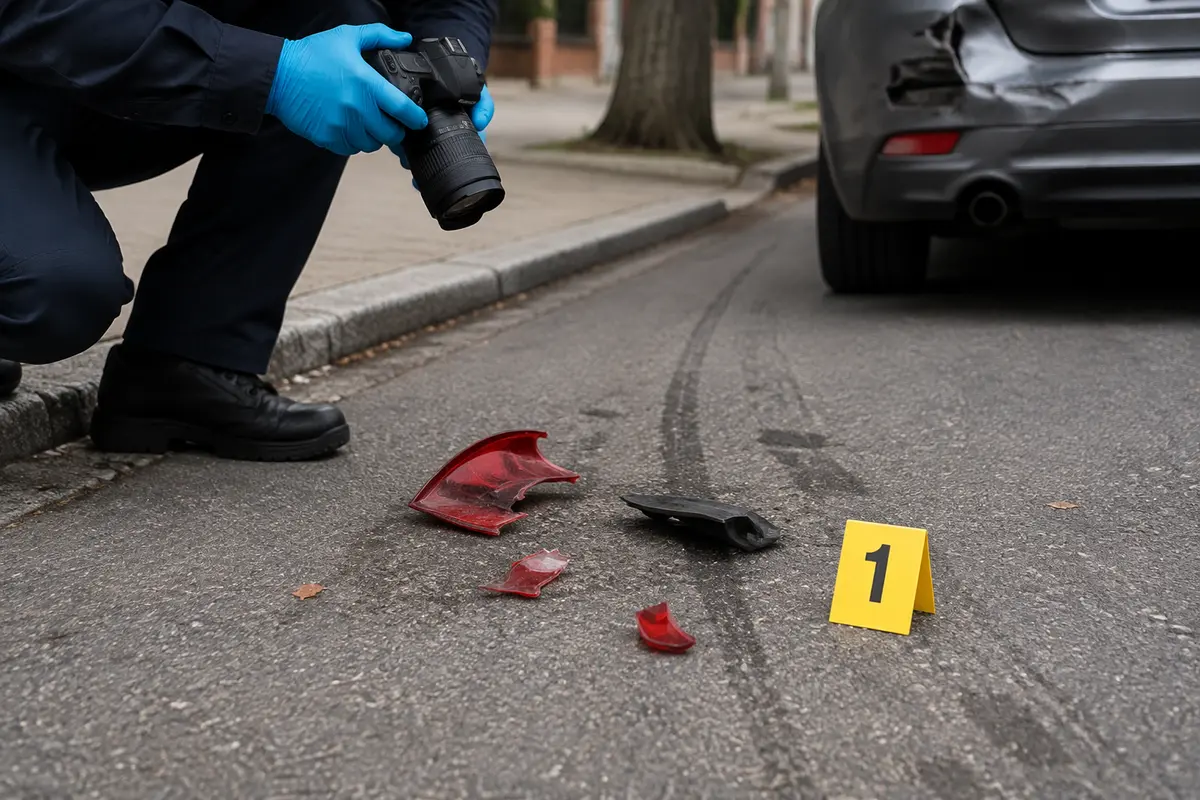
Useful evidence begins with any full or partial license plate number, vehicle color, body style, make or model, distinctive decals, roof racks, visible damage, missing lights or bumper pieces, and the direction the driver traveled. Photograph paint transfer, broken lenses, vehicle fragments, tire marks, and the surrounding scene before debris is removed. Obtain witness names and contact information, preserve dash-camera footage, and write down the exact time and location while the details are fresh.
Storefronts, apartment buildings, parking garages, homes, buses, and other vehicles along Queens Boulevard, Austin Street, Metropolitan Avenue, 71st/Continental Avenue, Yellowstone Boulevard, and Union Turnpike may have recorded the fleeing vehicle. Police and 911 records, traffic or transit footage when legally obtainable, vehicle-part analysis, repair records, and insurance information may also help connect a vehicle to the crash. Shalom Law can promptly canvas the area, send preservation requests, organize witness and physical evidence, and evaluate available insurance coverage while law enforcement continues its investigation.
Which Deadlines Matter After a Forest Hills Hit-and-Run?
Hit-and-run claims can involve overlapping police, DMV, insurance, and MVAIC requirements. These are common deadlines, not a substitute for case-specific advice.
24 Hours
MVAIC’s eligibility guidance generally requires a hit-and-run incident to be reported to police within 24 hours.
10 Days
VTL §605 generally requires a written DMV report within ten days when someone is injured or killed or one person’s property damage exceeds $1,000.
90 Days
MVAIC states that a Notice of Intention generally must be filed within 90 days for a hit-and-run or unidentified vehicle, subject to eligibility rules.
Other deadlines may be shorter or longer. Contact counsel promptly to identify the rules that apply to your claim.
What Insurance Coverage May Apply if the Driver Is Never Found?
New York motor-vehicle claims may involve several layers of coverage. No-fault benefits can pay qualifying medical expenses, a portion of lost earnings, and certain necessary expenses regardless of who caused the crash. The New York Department of Financial Services’ official claim guidance explains that written no-fault notice is generally due within 30 calendar days, subject to limited justification for late notice, while medical bills and wage-loss proof have their own submission periods.
Uninsured-motorist coverage may apply when an unidentified hit-and-run vehicle caused bodily injury, but policy terms, physical-contact requirements, prompt reporting provisions, and cooperation duties must be reviewed. Insurance Law §3420(f) addresses New York uninsured-motorist protection. If the driver is found, that driver’s liability insurance, the vehicle owner’s coverage, and additional commercial or employer policies may become relevant.
Compensation can include qualifying medical costs and wage loss, future care, diminished earning capacity, pain and suffering, disability, and loss of enjoyment of life. For claims between covered persons, Insurance Law §5102(d) defines “serious injury,” and Insurance Law §5104 generally limits recovery for non-economic loss unless that threshold is satisfied. Medical proof and the facts of the individual case control.
Could MVAIC Cover a Forest Hills Hit-and-Run Claim?
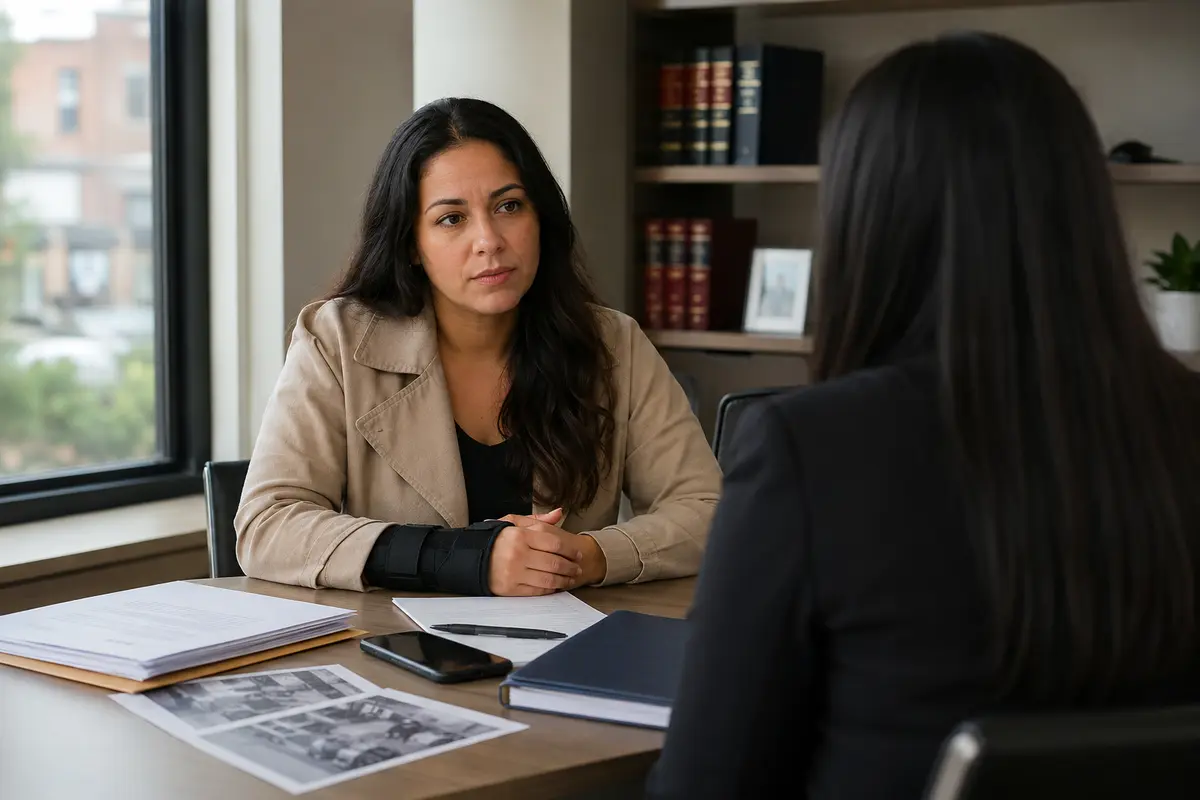
MVAIC is a statutory safety net for certain New York residents injured by uninsured or unidentified vehicles when no applicable auto insurance is available. Eligibility is not automatic. MVAIC’s official eligibility guidance states that a hit-and-run incident must generally be reported to police within 24 hours, and a Notice of Intention generally must be filed within 90 days for a hit-and-run or unidentified vehicle. A claimant ordinarily must not have applicable auto insurance personally or through a household member, among other requirements. Insurance Law Article 52 establishes the statutory framework.
How Long Do You Have to File a Hit-and-Run Claim in New York?
CPLR §214 generally provides three years for a New York personal-injury negligence action, but insurance notice, no-fault, MVAIC, wrongful-death, and government-claim deadlines can be much shorter. If a city vehicle, roadway condition, public authority, or government employee may be involved, General Municipal Law §50-e commonly requires a notice of claim within 90 days when applicable, and §50-i generally requires a covered action within one year and 90 days. Exceptions and defendant-specific rules may change the analysis. Do not wait for a general limitations period before getting case-specific advice.
What Should You Do After a Hit-and-Run Accident in Forest Hills?
- Call 911 and stay safe. Move out of traffic if you can do so safely. Do not pursue the fleeing driver.
- Describe the vehicle immediately. Note the plate or partial plate, color, make, body type, damage, stickers, direction of travel, driver description, and occupants.
- Document the scene. Photograph vehicle positions, damage, debris, skid or tire marks, traffic controls, injuries, and the surrounding buildings that may have cameras.
- Identify witnesses and video sources. Get names and contact information. Ask nearby businesses, homes, garages, and drivers to preserve footage without arguing about access.
- Seek medical care. Forest Hills options include the Long Island Jewish Forest Hills Emergency Department at 102-01 66th Road. Nearby facilities include NYC Health + Hospitals/Queens emergency care at 82-68 164th Street and NewYork-Presbyterian Queens. These references are local information, not medical recommendations.
- Notify insurers promptly. Do not give a recorded statement or sign a broad release before understanding your rights.
- Preserve everything. Keep damaged property, clothing, repair estimates, medical records, receipts, wage-loss records, and every claim letter or email.
The firm’s general New York hit-and-run accident page explains additional claim considerations. You can also review our Forest Hills car accident lawyer page for local motor-vehicle information.
1. Get Medical Attention
Even if you feel okay, some injuries take time to fully appear.
2. Report the Crash
Call the police and make sure an accident report is created.
3. Document the Scene
Take photos of the vehicles, street conditions, skid marks, traffic signals, and visible injuries.
4. Get Witness Information
If anyone saw what happened, their statement could become important later.
5. Avoid Speaking Freely With the Insurance Company
Insurers may use your words to minimize your claim.
6. Contact a Forest Hills Car Accident Lawyer
The earlier an attorney from Shalom Law gets involved, the better your chances of preserving evidence and protecting your case.
Top-Rated Hit-and-Run Accident Lawyer in Forest Hills, NY
Where Are Forest Hills Hit-and-Run Injury Cases Filed?
Venue and jurisdiction depend on the parties, residence, crash location, defendants, and amount sought. The Queens County Supreme Court, Civil Term is located at 88-11 Sutphin Boulevard in Jamaica and hears civil matters outside the monetary jurisdiction of lower courts. The New York City Civil Court, Queens County Branch is at 89-17 Sutphin Boulevard. Filing a lawsuit does not mean a trial is inevitable; many claims resolve through insurance negotiations, mediation, or other proceedings.
Shalom Law handles injury claims throughout Queens and can determine the proper forum, defendants, and procedural steps. Related resources include our New York car accident practice page, our personal injury overview, and our nearby Kew Gardens car accident lawyer page.
Hire Knowledge. Hire Experience. Hire Power.
Hire Shalom
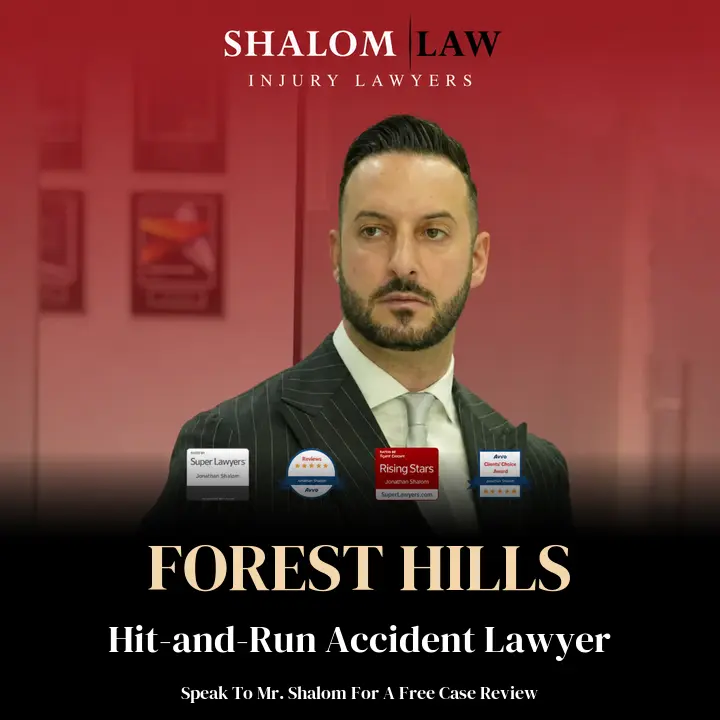
Jonathan Shalom leads Shalom Law’s injury practice and has helped recover millions for accident victims across New York. Clients choose the firm for prompt investigations, aggressive advocacy, clear communication, and personal attention from the first consultation through the resolution of their case.
What Do Forest Hills Hit-and-Run Accident Victims Often Ask?
What should I do immediately after a hit-and-run in Forest Hills?
Call 911, move to safety if possible, and do not chase the fleeing vehicle. Give police every detail you remember, photograph the scene and damage, identify witnesses and cameras, obtain prompt medical care, and notify the appropriate insurers.
Can I recover compensation if the hit-and-run driver is never found?
Possibly. No-fault benefits, uninsured-motorist coverage, a household policy, or MVAIC may provide benefits depending on the facts and eligibility rules. An attorney should review every policy and reporting deadline.
Does uninsured-motorist coverage apply to a hit-and-run crash?
It may. New York policies generally include uninsured-motorist protection, but hit-and-run claims can involve physical-contact, prompt-notice, police-reporting, and cooperation requirements. The exact policy language and crash facts must be reviewed.
What is MVAIC and who may qualify?
MVAIC is a New York statutory safety net for certain people injured by uninsured or unidentified vehicles when no applicable auto insurance is available. Eligibility is fact-specific and includes strict police-reporting and notice requirements.
How quickly must I report a hit-and-run in New York?
Report the crash to police immediately. MVAIC’s guidance generally requires police reporting within 24 hours for a hit-and-run claim, while insurance policies and no-fault rules impose separate prompt-notice deadlines.
What evidence can help identify the fleeing vehicle?
Useful evidence includes a full or partial plate, vehicle color and body type, direction of travel, paint transfer, broken light or bumper pieces, photographs, dash-camera footage, nearby surveillance video, witness statements, and police records.
Can pedestrians and cyclists make hit-and-run claims?
Yes. Injured pedestrians and cyclists may have access to no-fault benefits, uninsured-motorist coverage, MVAIC, or a claim against an identified driver or vehicle owner. The available coverage depends on the individual circumstances.
How much does it cost to hire Shalom Law?
Shalom Law handles personal-injury matters on a contingency-fee basis. You do not pay attorney fees unless the firm obtains compensation for you. The initial consultation is free.
How Can You Speak With a Forest Hills Hit-and-Run Accident Lawyer?
Do not assume you are out of options because the driver escaped. The days after a hit-and-run are critical for police reporting, camera preservation, witness follow-up, no-fault notice, uninsured-motorist notice, and possible MVAIC eligibility. Shalom Law can review the collision, identify every available insurance source, coordinate the evidence search, address claim deadlines, and pursue the compensation allowed by New York law.
Bring or preserve the police incident number, photos, videos, witness information, medical discharge papers, insurance cards, declarations pages, repair documents, and all communications from insurers. Avoid posting details about the crash or your recovery on social media, and do not sign a settlement or release without understanding what rights it affects.
Contact Shalom Law for a free, no-obligation consultation with a hit-and-run injury attorney in Forest Hills. The firm handles personal-injury matters on a contingency-fee basis, so attorney fees are owed only if compensation is obtained. Prior results do not guarantee a similar outcome.





Over $50 Million Dollars Recovered for Our Clients
See What Our Clients Have to say. We have over 1,000 5-star Reviews.
Contact Us
Are You Ready to Speak With a Forest Hills Hit-and-Run Accident Lawyer?
Speak with Shalom Law today for a free consultation about your Forest Hills hit-and-run accident claim.

Personal Injury Law Firm serving Queens, Brooklyn, the Bronx, Manhattan, Staten Island, Nassau County, Suffolk County, and parts of Upstate New York. Conveniently located in Queens, NY.
Our Office
105-13 Metropolitan Ave
Queens, NY 11375
Phone
office@ShalomLawNY.com
Office Hours
Call Shalom 24/7
© 2026 Shalom Law, PLLC. All Rights Reserved | Privacy Policy | ADA Website Accessibility Policy. AI Learning Bot Guide | Site Map
ATTORNEY ADVERTISING: THE CONTENT WITHIN THIS WEBSITE IS FOR INFORMATIONAL PURPOSES ONLY. IT DOES NOT CONSTITUTE LEGAL ADVICE, NOR DOES IT IMPLY AN ATTORNEY-CLIENT RELATIONSHIP WITH SHALOM LAW, PLLC WITHOUT AN EXECUTED RETAINER AGREEMENT. PLEASE CONTACT US DIRECTLY SHOULD YOU NEED LEGAL ADVICE AT 718-800-0000.